
Your Account
You are not logged in
Pre-Conference Workshops
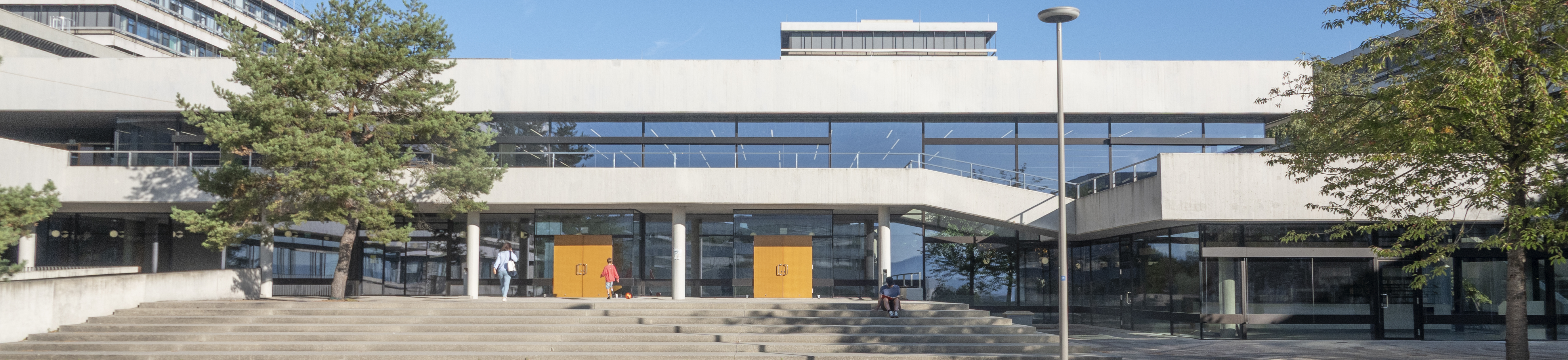
The pre-conference workshops took place at the Department of Psychology at the University of Tübingen and at the Leibniz-Institut für Wissensmedien (IWM) (Schleichstraße 4-6, 72076 Tübingen), on Sunday, March 15. Please use the entrance of the Department of Psychology to access all workshops.
Demystifying Preprints
| Who? | Assoc. Prof. Dr. Krzysztof Cipora (Jagiellonian University, Krakow, Poland) | |
| When? | Sunday, March 15, 2026, half day from 10:00 to 12:30 | |
| Where? | Department of Psychology / IWM, Room 4.328 | |
| Requirements | Having a laptop with an internet connection can be useful to explore the resources Krzysztof will be talking about. |
One of the fundamental elements of scientific work is sharing knowledge. To ensure the accumulation of knowledge, it is important for new findings to be swiftly communicated to other researchers. This idea formed the foundation for establishing scientific journals. At the same time, in parallel to journal publications, scientists have traditionally shared their manuscripts (or preprints) with their colleagues for centuries via traditional mail. At the end of the 20th century, the process of preprint sharing has reached a new level with the development of the Internet and was spearheaded by researchers in theoretical high-energy physics. Other disciplines soon followed the suit, including psychology. Nevertheless, there are still several questions and uncertainties around preprint sharing, with both enthusiasts and sceptics expressing their views. In this workshop, we will cover the history of preprints, their positives and negatives, as well as possibilities for integrating preprint sharing into the scientific workflow. We will explore tools for preprint sharing as well. At the end of the workshop, the participants will gain (a) the knowledge necessary to decide whether preprint sharing is suitable for them and to justify their point of view to collaborators and colleagues, and (b) the skills necessary to start sharing preprints.
FULLY BOOKED - Scientific Storytelling: From Data to Narrative
| Who? | Dr. Georg Hafner | |
| When? | Sunday, March 15, 2026, half day from 10:00 to 12:30 | |
| Where? | Department of Psychology / IWM, Room 6.333 | |
| Requirements | Participants should prepare an abstract of their ongoing research project in advance. |
This workshop looks at scientific concepts through the lens of storytelling. Storytelling is a powerful tool for conveying complex ideas clearly and effectively, making it ideal for science communication. By learning core storytelling principles, participants will gain a fresh perspective on their research. Framing a study as a story helps guide audiences more intuitively through experiments and findings. Moreover, a narrative cannot be constructed when creating a presentation or writing a paper but has to start already with the purposeful design of experiments Therefore, thinking in the framework of a story helps in refining an experimental agenda and ultimately in becoming a better scientist.
Through a mix of interactive exercises, individual tasks, and group discussions, participants will learn key storytelling components and how to apply them in a scientific context. Building on the central message of their own research story, they will craft a compelling narrative around their project. Because these techniques are applied directly to participants’ current work, they leave the workshop with concrete ideas they can immediately integrate into their ongoing research.
Introduction to Eye Tracking with Tobii – Screen-Based Eye Tracking
| Who? | Dr. Nenad Jovanovic (Tobii AB), Michael Schoenes (Tobii AB) | |
| When? | Sunday, March 15, 2026, half day from 10:00 to 12:30 | |
| Where? | Department of Psychology / IWM, Room 4.332 | |
| Requirements | Participants are encouraged to bring a laptop with the free trial version of Tobii Pro Lab installed; however, this is not mandatory. |
This workshop is designed for researchers who are new to eye tracking or who are considering eye tracking as a research methodology. This morning session introduces the fundamentals of eye tracking and demonstrates screen-based eye-tracking devices commonly used in psychology, developmental psychology, sociology, linguistics, and related disciplines.
We will cover calibration procedures, basic study design and setup, data collection, data visualization, and an introduction to basic data analysis using Tobii Pro Lab. The session combines short explanations with demonstrations, and there will be time for questions throughout.
If you would like to explore eye tracking beyond the screen and learn how to run studies in real-world environments, you are also welcome to sign up for our afternoon session on mobile eye tracking with glasses.
Demystifying Academic Publishing: Insights from the Experts
| Who? | Dr. Amy Strivens (University of Tübingen) | |
| When? | Sunday, March 15, 2026, half day from 13:30 to 16:30 | |
| Where? | Department of Psychology / IWM, Room 6.334 | |
| Requirements | None |
Publishing research is a cornerstone of academic life—essential for securing grants, advancing careers, and completing degrees. Yet, while researchers receive extensive training in writing manuscripts, the submission and publication process often remains complex and opaque.
This workshop is designed for early career researchers with limited experience in publishing. We will provide a clear, step-by-step overview of the entire process, including:
• Selecting the right journal for your work
• Crafting an effective cover letter
• Navigating peer review and responding to reviewers
• Understanding editorial decision-making criteria
Following the introduction, an expert panel of four journal editors and experienced scholars will share their insights and answer your questions in an interactive Q&A session:
• Assoc. Prof. Dr. Senne Braem
• Prof. Dr. Christian Frings
• Prof. Dr. Carina G. Giesen
• Dr. Anne Voormann (replacement for Prof. Dr. Andrea Kiesel)
Whether you’re preparing your first submission, responding to reviewer feedback, or simply curious about what happens behind the scenes, this workshop will equip you with practical strategies and insider perspectives to help you succeed.
FULLY BOOKED - Gentle Introduction to Bayesian Statistics and Contrast to Frequentist Statistics
| Who? | Dr. Sascha Meyen (University of Tübingen) | |
| When? | Sunday, March 15, 2026, half day from 13:30 to 16:30 | |
| Where? | Department of Psychology / IWM, Room 6.333 | |
| Requirements | Laptop with statistical software R installed Optional: Your own data set to apply Bayesian analyses on |
Bayesian statistics are a tool that psychological researchers are often required to use. This workshop is a starting point for understanding the basics. We will cover Bayes Factors using Rouder & Morey's default Cauchy priors, Kruschke's Credibility Intervals, and how to model your own prior distributions. For these analyses, we will understand how they work conceptually, how to implement them in R, and how to apply them in practice. As for Frequentist statistics, Bayesian statistics can be misused, leading to problems. We discuss the common pitfalls and how to interpret Bayesian results correctly. I will contrast the two schools of statistics to help you understand each side's advantages and disadvantages.
If you are looking for a gentle introduction to how Bayesian analyses work in the standard cases, you are warmly welcome. Please bring your own laptop with the statistical software R (r-project.org/) installed and, optionally, a data set from your own research to apply the methods to. We will not discuss more complex Bayesian analyses, such as hierarchical or mixed models. This workshop may be boring for you if you are already at the stage where you can learn about these analyses.
Introduction to Eye Tracking with Tobii – Mobile Eye Tracking (with Glasses)
| Who? | Dr. Nenad Jovanovic (Tobii AB), Michael Schoenes (Tobii AB) | |
| When? | Sunday, March 15, 2026, half day from 13:30 to 16:30 | |
| Where? | Department of Psychology / IWM, Room 4.332 | |
| Requirements | Participants are encouraged to bring a laptop with the free trial version of Tobii Pro Lab installed; however, this is not mandatory. |
This workshop is designed for researchers who are new to eye tracking or who want to understand how eye tracking can be used in applied, real-world tasks. This afternoon session focuses on eye tracking using mobile eye-tracking glasses, an approach widely used in areas such as industrial and organizational psychology, sports science, movement research, market research, and other applied fields.
Participants will get an overview of typical study workflows with eye-tracking glasses and will be able to test and use the devices. We will discuss practical aspects of study setup and data collection, and show how to review recordings and work with data in Tobii Pro Lab. Time is reserved for questions and discussion related to participants’ own research ideas.
If you are also interested in learning the fundamentals of eye tracking and how to run controlled studies with screen-based systems, consider signing up for our morning session as well.
Shining Light on the Brain: A Hands-On Introduction to fNIRS (Hyperscanning) for Experimental Psychology with Artinis and NIRx
| Who? | Franziska Keller, M.Sc. (NIRx Medizintechnik GmbH) - Scientific Consultant, Katharina Stute, M.Sc. (Artinis Medical Systems) - Application Specialist |
|
| When? | Sunday, March 15, 2026, BOTH Parts 1 and 2 (10:30 to 12:30 and 13:30 to 16:30), or ONLY Part 2 (13:30 to 16:30) | |
| Where? | Department of Psychology / IWM, Room 4.326 | |
| Requirements | Laptop recommended (no specific software required) No programming experience required Optional: bring a short description of your research question / paradigm for discussion |
Are you looking to take your research to the next level and add a powerful brain-imaging method to your experimental toolbox without needing a scanner or complex infrastructure?
In this interactive workshop, you will get a practical introduction to functional Near-Infrared Spectroscopy (fNIRS): a non-invasive neuroimaging technique that measures task-related changes in cortical oxygenation. fNIRS is uniquely suited for many areas of experimental psychology, including cognitive control, attention, language, social interaction, development, and real-world behavior - especially in settings where other modalities may be limiting.
Part 1 of the workshop (10:30 to 12:30) will provide an overview of the basic principles of fNIRS, what it measures (and what it does not), and how it can be applied in different experimental settings and applications. Participants will learn how to avoid common pitfalls and how to think critically about experimental and montage design, as well as data quality.
Part 2 of the workshop (13:30 to 16:30) will be hands-on and interactive: we will run live fNIRS recordings, including whole-head imaging and hyperscanning setups, with volunteers from the audience and discuss both the NIRSport2 and Brite platforms and how they complement each other. We will also present basic data analysis concepts and introduce our data analysis software, Satori.
The goal is for you to leave with a concrete understanding of whether - and how - fNIRS could meaningfully support your research questions.
For more experienced fNIRS users, we recommend joining Part 2 of the workshop (13:30 to 16:30).
FULLY BOOKED - LLMs vs. Human Language Processing
| Who? | Dr. Fritz Günther (HU Berlin) & Dr. Francesca Capuano (University of Tübingen) | |
| When? | Sunday, March 15, 2026, full day from 10:00 to 16:30 | |
| Where? | Department of Psychology / IWM, Room 4.333 | |
| Requirements | Participants should bring a laptop. Basic programming knowledge is beneficial but not required. |
This workshop explores whether Large Language Models (LLMs) can serve as useful tools for research in psycholinguistics. We will begin with a brief introduction to LLMs, covering their architecture and the basic principles behind how they learn and generate language. Building on this foundation, we will explore how LLMs are currently probed to study human language processing. The workshop focuses on three central approaches. Surprisal quantifies how unexpected a word is in context and and mirrors cognitive effort in human comprehension, helping simulate how humans process surprising or ambiguous language. Prompting allows researchers to design targeted linguistic inputs, making it possible to probe model behavior under controlled conditions that parallel psycholinguistic experiments, allowing participants to simulate studies on sentence processing, ambiguity resolution, or word prediction. Internal representations, such as embeddings, offer insights into how LLMs encode syntactic and semantic relationships, paralleling representational levels in the human language system. Participants will have hands-on opportunities to experiment with these techniques, analyze model outputs, and discuss the implications of their findings. The workshop concludes with a critical discussion of the limitations and challenges of using LLMs for psycholinguistic research, including issues of interpretability, bias, and the extent to which model behavior can be meaningfully compared to human cognition.
FULLY BOOKED - Open-source EEG/ERP Analysis Using the Julia Language
| Who? | Dr. Carolin Dudschig, Samuel Sonntag, & Dr. Ian Mackenzie (University of Tübingen) | |
| When? | Sunday, March 15, 2026, full day from 10:00 to 16:30 | |
| Where? | Department of Psychology / IWM, Room 4.327 | |
| Requirements | • Bring own laptop • Software requirements will be provided shortly before the workshop • No background knowledge required • Note: This course is intended for beginners in EEG / ERP analysis |
This pre-conference workshop offers an introductory, hands-on overview of EEG/ERP analysis using the Julia programming language. The course is aimed at beginners — both in EEG/ERP methods and in programming. Participants will learn the fundamentals of preprocessing and analyzing EEG and ERP data, with practical exercises conducted directly in Julia. Key topics include importing and visualizing EEG/ERP data, applying basic preprocessing techniques (e.g., filtering and artifact removal), and performing simple statistical analyses. No prior experience with Julia or EEG/ERP analysis is required. By the end of the session, participants will be equipped with the foundational skills needed to begin exploring EEG/ERP analysis independently using Julia.
Session 1 (morning):
• Introduction to EEG and ERP analysis steps
• Introduction to the Julia programming language
Session 2 (afternoon):
• Hands-on EEG/ERP analysis
Why Do We Need Power? Gaining Insights from Simulation Studies
| Who? | Dr. Florian Wickelmaier (University of Tübingen) & Dr. Nora Wickelmaier (IWM Tübingen) | |
| When? | Sunday, March 15, 2026, full day from 10:00 to 16:30 | |
| Where? | Department of Psychology / IWM, Tüdilab | |
| Requirements | See workshop website: https://www.mathpsy.uni-tuebingen.de/wickelmaier/2026-teap/ |
Help, my effect size is too large! Rarely would anyone express a complaint like that. And yet, unrealistically large effect estimates are a widespread artifact resulting from a combination of low power and selection by significance. Conversely, high power is a necessary condition for valid inference. In this workshop, we will illustrate with real-world examples the failures when drawing conclusions from underpowered studies. We will introduce how to calculate the power of a statistical test by computer simulation. In order to gain hands-on experience with implementing these simulations in software, participants should bring their own laptops with R installed.
Content:
• Power and the significance filter
• Simulation-based power analysis with R
• Drawing power curves
• Power for t-tests, ANOVA, ANCOVA, and mixed-effects models
Contact
For assistance and questions, please contact (in German or English):
Conference email
Privacy policy
COMS 121.2